ServicesExams & Cleanings
Exams & Cleanings for Kids in Cumberland
A checkup with us starts with a slow, careful look at your child's teeth and gums. Then comes a gentle cleaning and a plain account of what we found. You leave knowing what is healthy, what to watch and whether anything needs care.
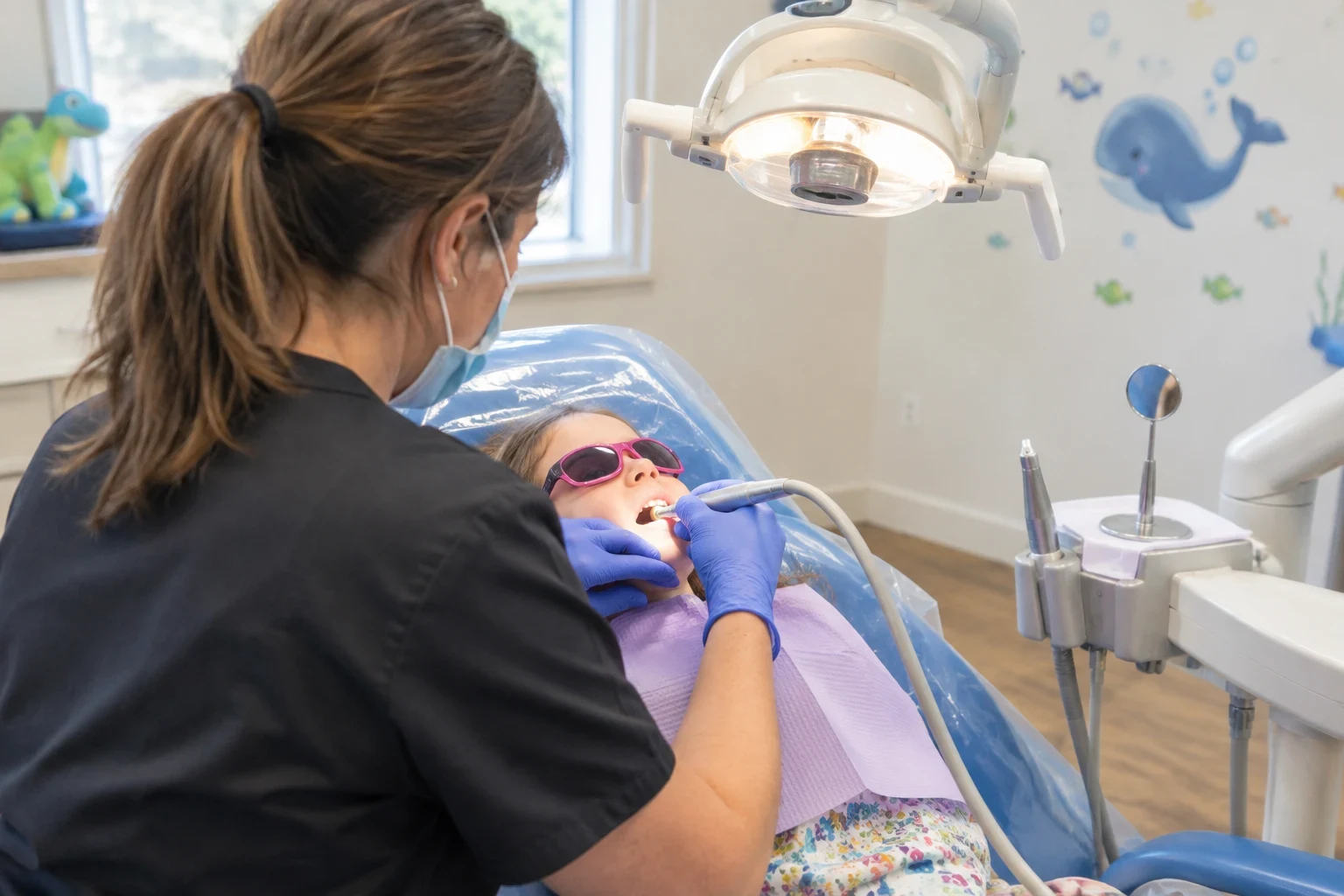
A checkup built around looking first
Most visits are routine, and we say so when they are. Our job at an exam is to look closely at every tooth, check how the bite and jaw are developing, and tell you what we see in everyday words. Recommendations come after the findings, never before.
Kids usually do best with a visit about every six months. The first one belongs right around the time a first tooth appears, and ideally before the first birthday candle. Early visits are short and mostly about getting comfortable in the chair. As children grow, the exam follows new teeth, spacing and the habits that shape healthy teeth.
If the exam shows something that needs more than a cleaning, such as a cavity or a deep groove worth protecting, we explain the options and let you decide. Treatment like fillings or sealants is scheduled as its own visit unless you would rather handle it sooner.
What a visit includes
- A tooth-by-tooth exam
- We check each tooth for soft spots, early white marks and wear, and look at the gums, tongue and cheeks. For babies and toddlers, this is often done knee to knee with a parent so your child can stay close.
- X-rays only when they add something
- Cavities often start between teeth where eyes cannot reach. How often we take images depends on how old your child is and how prone they are to cavities, rather than a set calendar, and we show you what the images reveal.
- A gentle cleaning
- Plaque and any hardened tartar are removed with small, kid-sized instruments, then the teeth are polished. We go at your child's pace and explain each step before we do it.
- Fluoride when it fits
- Many visits end with a quick fluoride varnish that helps strengthen enamel. Our Fluoride Treatment page covers how it works and when we suggest it.
- Growth and bite check
- We watch how baby teeth are loosening, how adult teeth are coming in and whether habits like thumb sucking are affecting the bite.
- Plain findings for parents
- Before you leave, we walk you through what we saw, what is healthy and what to keep an eye on. You get practical brushing and snack advice for your child's age, not a lecture.
Signs it is time for a checkup
No visit in the last six months
Small cavities in baby teeth can grow quickly because the enamel is thin. A regular exam catches them while they are still simple to treat.
White or brown spots
Chalky white lines near the gums are often the earliest sign of decay. Brown or dark spots can mean it has gone further.
Bleeding gums when brushing
A little pink in the sink usually points to plaque along the gumline. A cleaning and a few brushing tips often clear it up.
Complaints about cold or sweets
A child who flinches at a cold drink or pulls back from candy may have a sensitive spot or the start of a cavity. A close look tells us which one it is.
A first tooth or first birthday
Either milestone means it is time for the first visit. It sets a baseline and makes later checkups feel familiar.
What shapes the cost of an exam and cleaning
A routine exam and cleaning is one of the simpler visits we offer, and most insurance plans treat it as preventive care. What your child needs on that particular day is what sets the final total. If something beyond the basics turns up, we talk it through with you before going further.
Whether X-rays are taken
Some visits need no images at all. Others call for bitewings between the back teeth or a wider view of adult teeth forming below. Your child's age and cavity risk guide that choice.
Fluoride and other add-ons
A fluoride varnish adds only a little to the visit. If the exam points to sealants or a filling, those are separate services and are priced on their own.
Your insurance plan
Most insurance plans work with our office, and we can help you see how yours covers preventive checkups. Benefits differ from plan to plan, so keep your card handy when you call to register.
How you pay
For any balance, you can use a MasterCard, Visa or Discover card. Families who want to spread payments out can also use the CareCredit Patient Payment Plan.
How the visit runs
- 1
Getting settled
We greet your child, show them the chair and let them hold the mirror if they like. Parents are welcome to stay close.
- 2
The careful look
The dentist examines teeth, gums and bite, and takes X-rays if they are needed. We note anything worth watching.
- 3
Cleaning and polish
Plaque and tartar come off, the teeth are polished and fluoride is applied if it suits your child.
- 4
Talking it through
We share what we found in plain terms, answer your questions and set the next checkup. If any treatment is worth considering, we explain why and leave the choice with you.
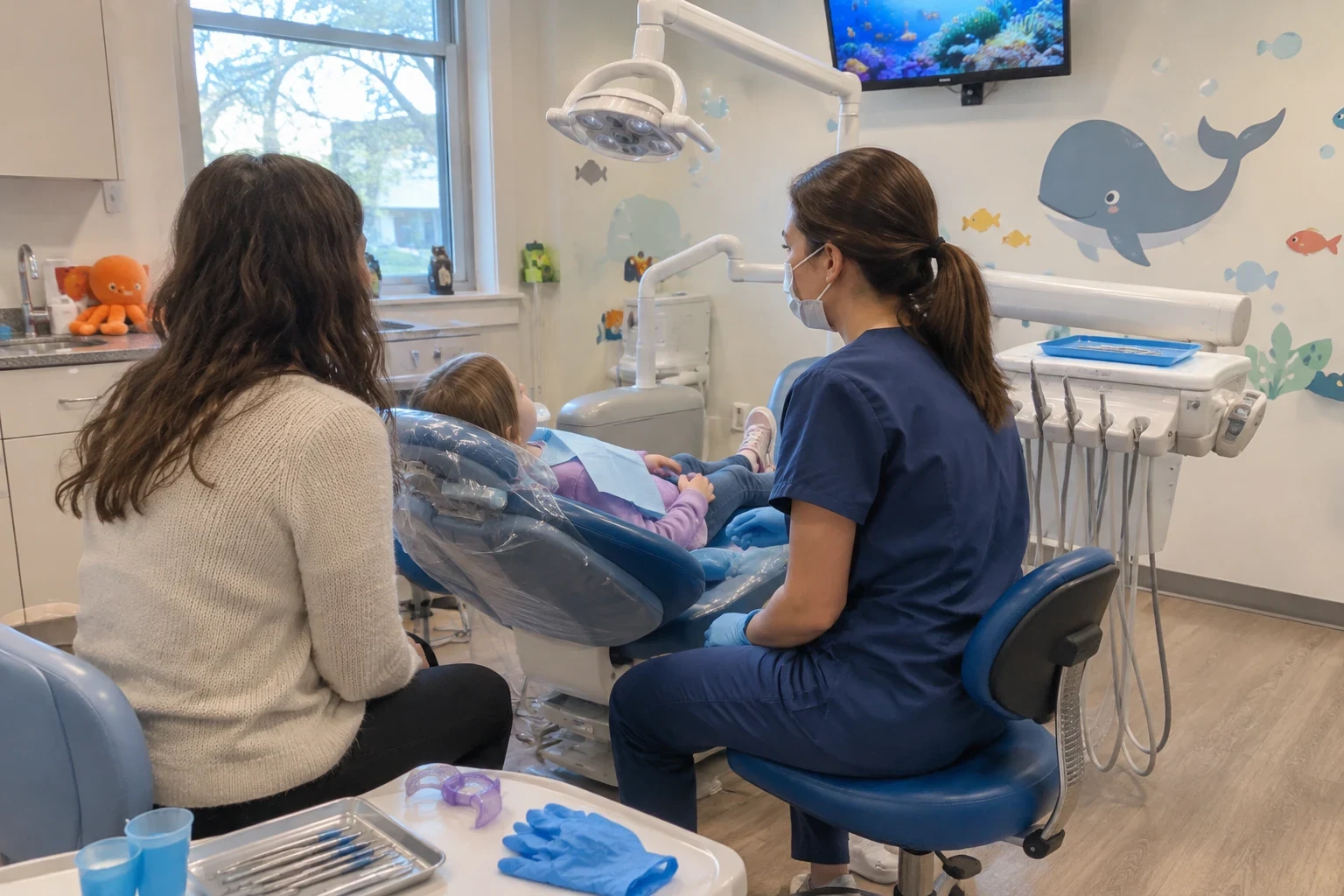
Questions parents ask about checkups
When should my child have their first dental visit?
Plan on it once that first tooth breaks through, and no later than age one. The appointment is brief and gentle. We check how the mouth is developing and show you easy ways to clean very small teeth.
Can I stay in the room with my child?
Yes. Many parents sit nearby or hold younger children during the exam. Some older kids prefer to go on their own, and that is fine too.
What if my child is nervous or cries?
That is common, especially at the first few visits. We slow down, explain each step and let your child see and touch the tools. If a child cannot settle, we stop and try again another day rather than force it.
Will you always find something that needs treatment?
No. Many checkups end with a clean result and a date for the next one. When we do see something, we show you and explain it before suggesting anything.
How often are X-rays needed?
It depends on your child's age, history of cavities and how the teeth sit together. Some kids need them yearly, others less often. We take only what helps us see something we otherwise could not.
What should we do before the visit?
Brush as usual and bring your insurance card. Let us know about any medications, health conditions or worries your child has about the dentist.
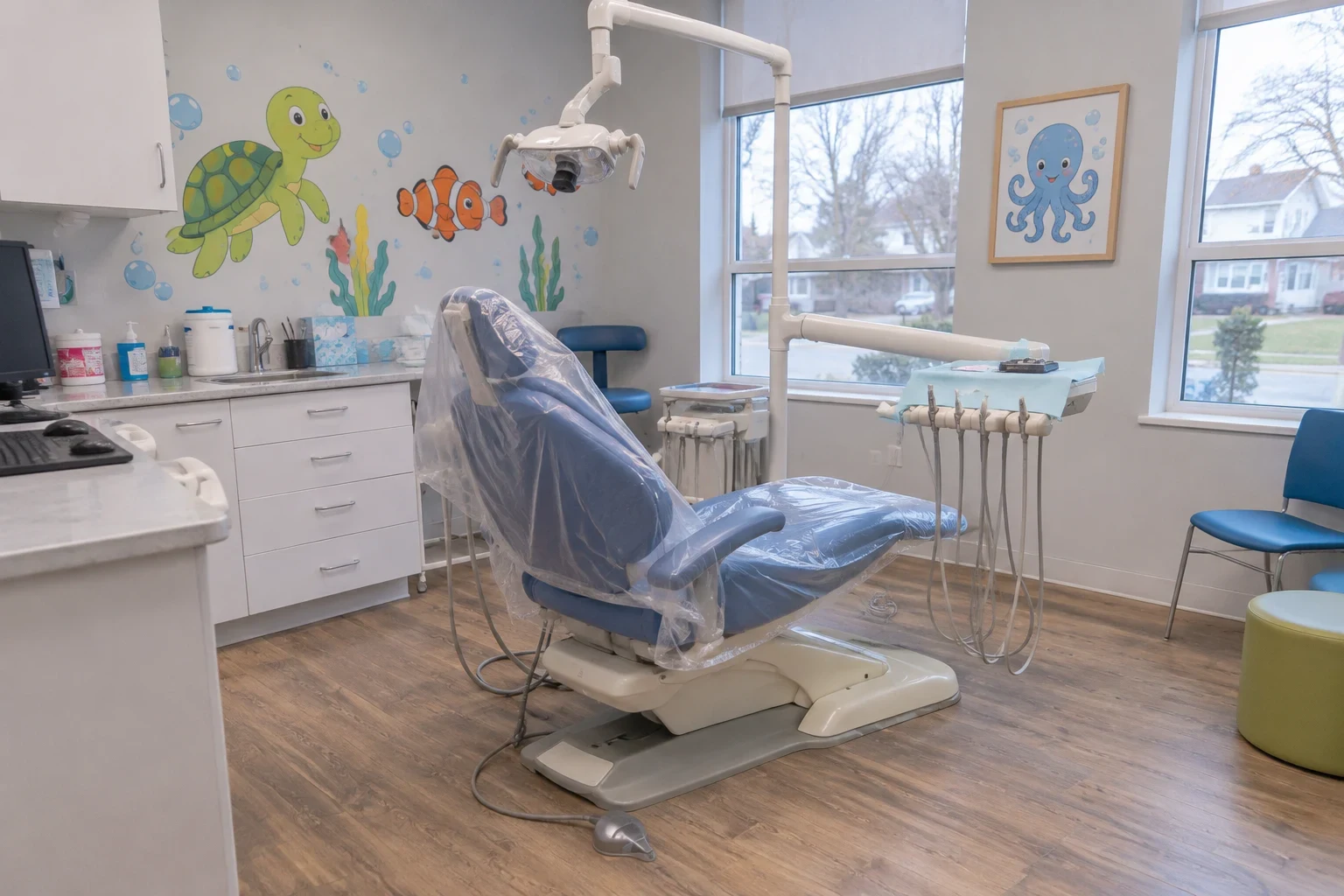
Let's get your child on the schedule
One short phone conversation sets your child up as a new patient and finds a time that works for your family. We ask a few questions about health history and insurance up front, so the day of the visit stays calm and unhurried.