ServicesFillings
Fillings for Kids in Cumberland
When a cavity shows up, we look closely before we pick up a single instrument. You hear what we found, how deep it goes and whether a filling is the right answer. Then we restore your child's tooth gently, with a finish that blends into their smile.
What a Filling Does for Your Child
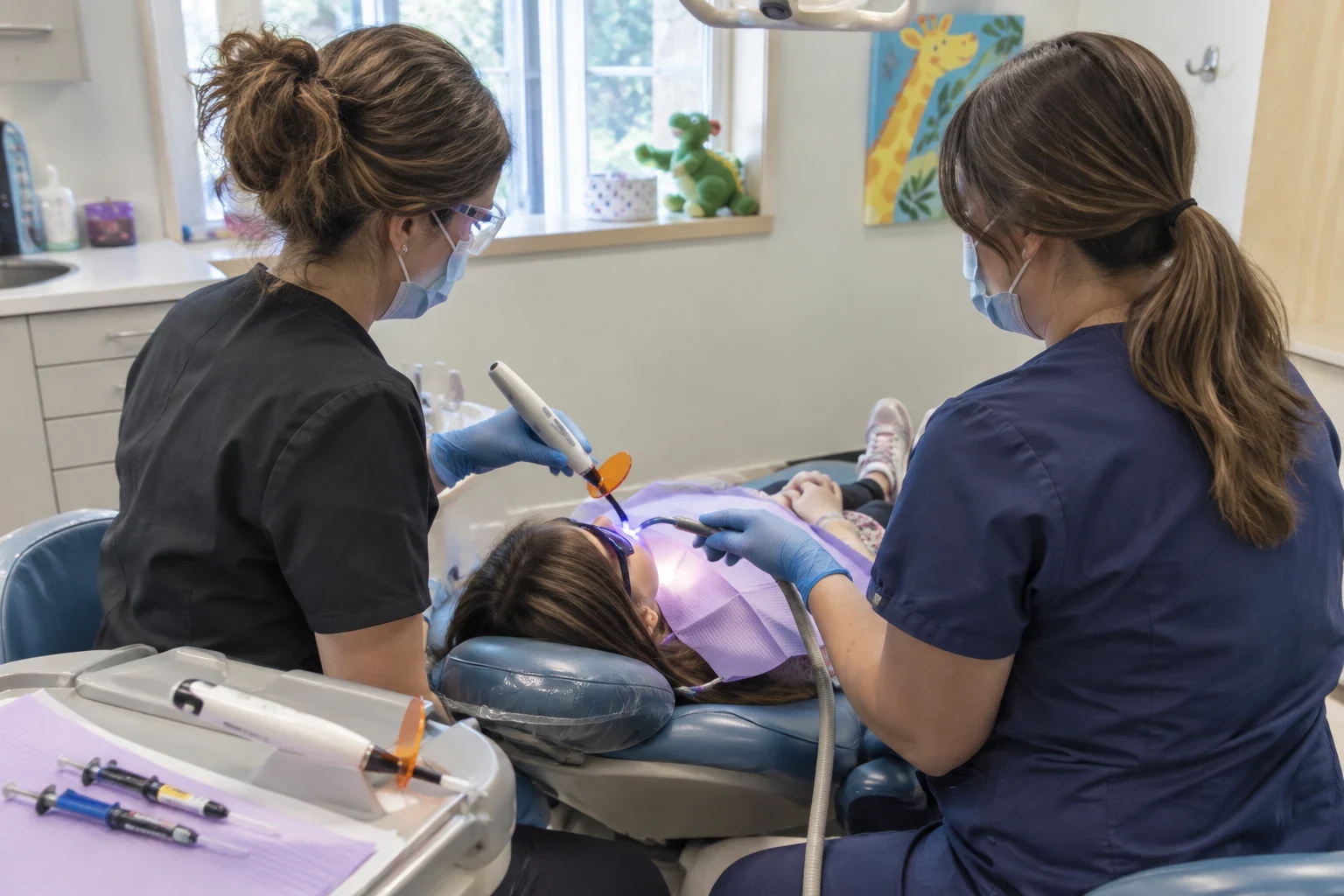
Decay turns the hard outer layers of a tooth soft. During a filling we clear out that weakened enamel and dentin, clean the area, and rebuild the tooth with a material that holds tight and restores its natural shape. When we catch a cavity early, this is usually all a child needs.
Baby teeth carry more weight than many parents realize. They save room for the adult teeth, help kids chew and speak clearly, and some of them stay until age 11 or 12. Decay that goes untreated in a baby tooth can travel down to the nerve, and a simple appointment becomes a larger one.
We show you what we see before we suggest any treatment. An early spot can sometimes be monitored and strengthened with fluoride instead. When filling the tooth is the better choice, we explain our reasons in everyday language.
What Your Child's Filling Visit Includes
A close look and X-rays when needed
We check the tooth visually and, when the cavity sits between teeth, take X-rays to see how far it goes. This tells us whether a filling is enough or whether the tooth needs more support.
Photos and plain findings
Where we can, we show you an image of the tooth and walk you through it. You know what is being treated before we start.
Gentle numbing
We use a topical gel first so the injection is barely felt, then numb only the area we are working on. We explain each step to your child in simple, calm words.
Tooth-colored material
For most kids we use composite resin, matched to the tooth's shade and placed in thin layers that set firmly against the tooth. It is shaped and polished so it feels smooth to the tongue and looks natural when your child smiles.
A bite check and polish
We have your child bite down gently and adjust any high spots. A filling that sits right is more comfortable and less likely to chip.
Signs Your Child May Need a Filling
- Sensitivity to sweets or cold
- If your child flinches at ice cream, juice or a cold drink, the enamel may have thinned enough to expose the softer layer beneath it.
- White, brown or dark spots
- Dull, chalky white patches often mark early decay. Brown or black spots, especially in the grooves of back teeth, tend to mean it has progressed.
- Food that keeps getting stuck
- A child who keeps poking at the same tooth may have a small hole or rough edge that traps food.
- Favoring one side at meals
- Young kids seldom tell you a tooth is sore. Instead you may notice them chewing only on the left or right, or skipping crunchy foods they used to like.
- A spot found at a checkup
- Many cavities cause no pain at all at first. Regular exams and cleanings are often where we find them, while they are still small.
How the Appointment Goes
- 1
Settling in
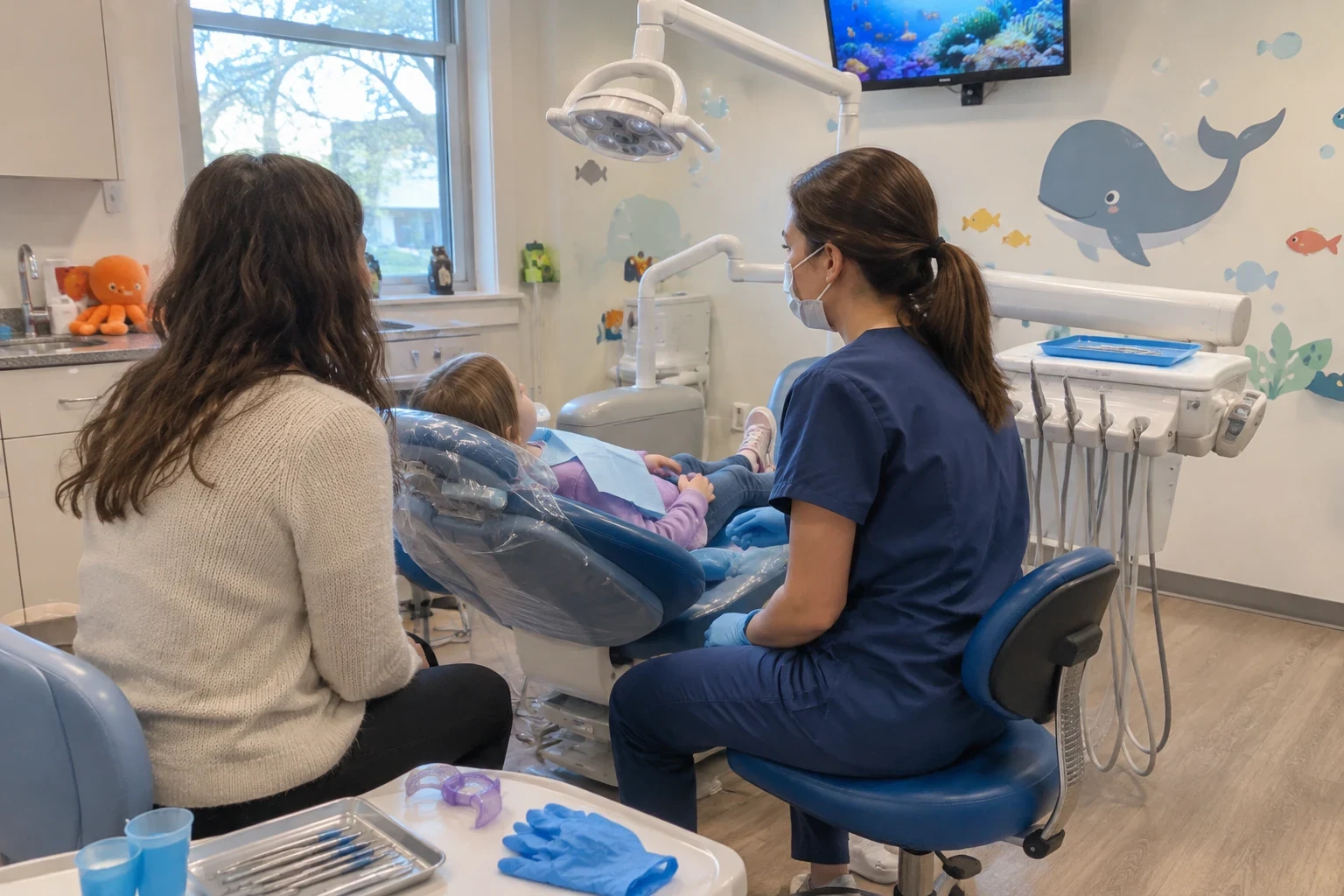
Your child gets comfortable in the chair, and we explain the visit in kid-friendly language. Parents are welcome to stay close.
- 2
Confirming the findings
We take a final look at the tooth and confirm the plan with you. If anything looks different from what we expected, we tell you before we go on.
- 3
Numbing and cleaning out the decay
After numbing, we remove only the softened part of the tooth and keep as much healthy enamel as we can. A small rubber shield keeps the area dry and stops water from pooling in your child's mouth.
- 4
Placing and shaping the filling
We bond the material in layers, harden each one with a blue curing light, and then shape and polish the surface to match the tooth.
- 5
After the visit
The numbness usually wears off within a few hours. We ask that your child avoid chewing on that side until it does, so they do not bite a cheek or lip by accident.
What Affects the Cost of a Filling
No two cavities are quite alike, so we wait until we have examined the tooth before we talk numbers. That way the estimate reflects what is actually there. For payment, families can use a Visa, MasterCard or Discover card, we work with most insurance plans, and the CareCredit Patient Payment Plan is an option if you would like to spread the cost out. We are happy to talk through which route suits you when you call to register.
- How far the decay has spread
- A shallow spot on a single surface needs less time and material than decay that reaches around two or three sides of the tooth.
- How many teeth need work
- We may treat several cavities in one sitting or split them over two visits, depending on how your child is doing and how much there is to do.
- Where the tooth sits
- Molars at the back and surfaces tucked between teeth are harder to reach and shape than a front tooth, so they take longer.
- Extra comfort support
- Plenty of kids are fine with numbing on its own. Some settle better with added help, which our Sedation Dentistry page explains.
- Your coverage
- Plans differ in how they handle fillings, and we can help you read what yours covers.
Questions Parents Ask About Fillings
- Is it worth treating a cavity in a baby tooth?
- Usually, yes. Back molars often stay put until around age 12, which is a long time to live with a decaying tooth. Left untreated, the cavity can grow, cause pain or infection, and affect the adult tooth forming underneath. Filling it lets the baby tooth do its job until it loosens naturally.
- Will the filling hurt?
- We start with a numbing gel and follow with a gentle injection, so most kids notice pressure rather than pain. The tooth can feel slightly tender for a day or so afterward, and that tends to pass quickly.
- Do tooth-colored fillings hold up for kids?
- For small and medium cavities, they do well. Composite attaches firmly to the tooth and handles everyday chewing. If the decay is large or the tooth is fragile, a pediatric crown may protect it better, and we will say so plainly.
- How long will we be in the office?
- One filling typically fits into a short appointment. Deeper cavities or several teeth take more time, and we give you an expected length when we book.
- What helps keep new cavities away?
- Brushing twice daily, flossing anywhere teeth touch and cutting back on slow sipping of juice all make a real difference. We also offer sealants for the deep grooves of back teeth and fluoride treatment to strengthen enamel.
Have a Spot You Want Us to Check?
We will look closely, tell you plainly what we see and explain whether a filling is needed. New patients from Cumberland and nearby towns are welcome.