ServicesPediatric Crowns
Pediatric Crowns in Cumberland
When a tooth has more decay or damage than a filling can hold, a small crown covers it and keeps it working. We look closely first, show you what we found, and explain whether a crown is truly the right fit for your child.
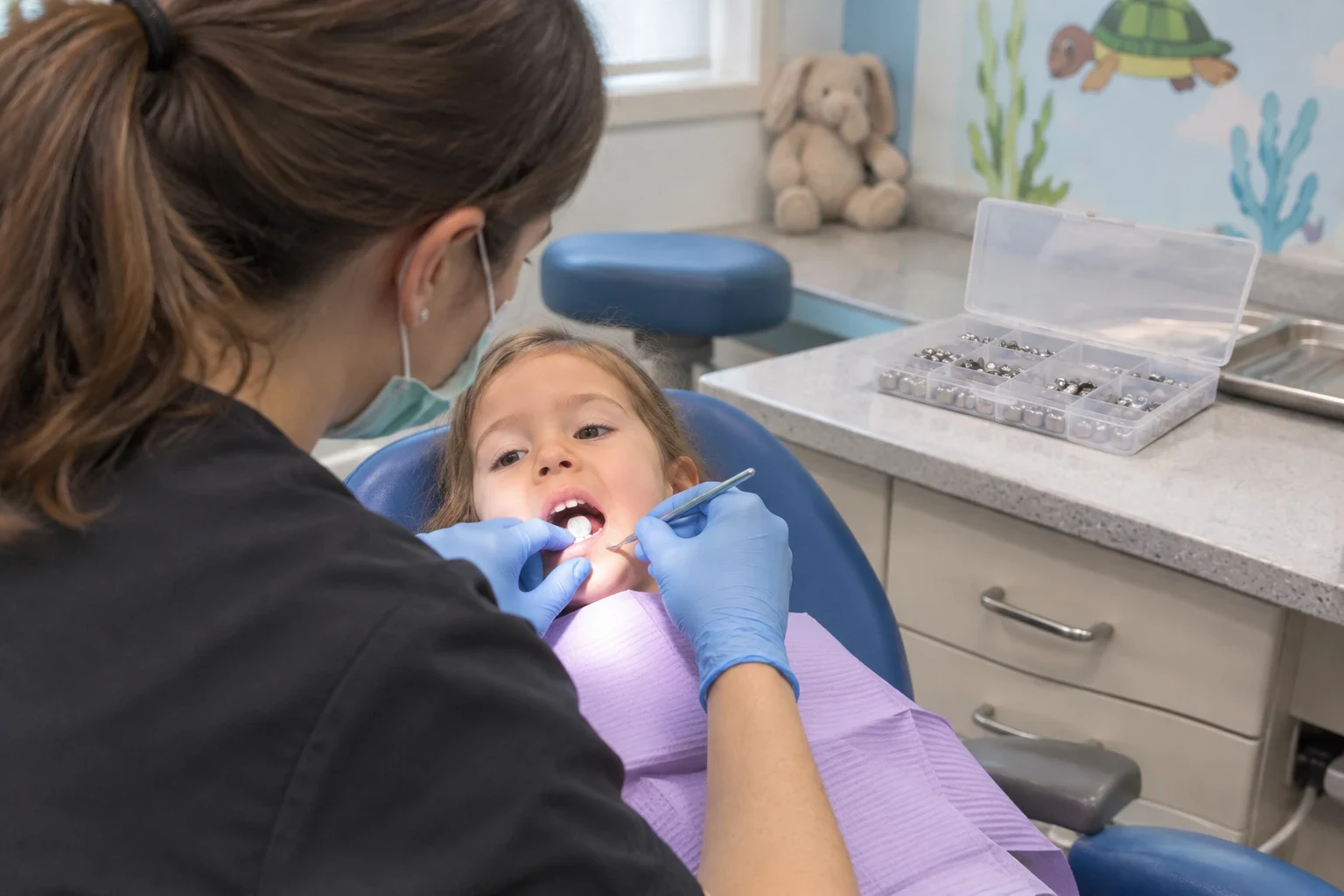
What a Pediatric Crown Does
A pediatric crown is a cap that fits over the whole tooth. It protects what is left of a tooth that is badly decayed, cracked, or weakened, so your child can chew comfortably and the tooth can stay in place until the adult tooth is ready to come in.
Baby teeth matter more than they look. A back molar may need to last until age 10 to 12, and it holds space for the tooth underneath. When decay spreads across several surfaces, a large filling tends to crack or leak. A crown wraps the tooth and usually lasts until it falls out on its own.
We only recommend a crown after a careful exam and X-rays. If a filling will do the job, we will tell you so. If the tooth is too far gone to save, we will say that too and talk through extractions and space maintainers instead.
What Crown Care Includes
- Exam and X-rays first
- We check the tooth, the gum around it and the root on X-rays. You see the images and hear our findings in plain words before any treatment is planned.
- Stainless steel crowns
- These are the workhorse for back baby molars. They are strong, fit snugly and are made to stand up to years of chewing. They are silver in color, which most kids stop noticing within a few days.
- Tooth-colored crowns
- For front teeth or visible molars, white zirconia or resin crowns blend in with the smile. We explain the trade-offs in strength, fit and how much tooth needs shaping so you can choose.
- Pulp treatment when needed
- If decay has reached the nerve, the tooth often needs a pulpotomy before the crown goes on. We cover this on our Root Canals page and will tell you ahead of time if we expect it.
- Comfort options
- Most crowns are placed with local numbing alone. For anxious kids or several teeth at once, we discuss the options on our Sedation Dentistry page.
Signs Your Child May Need a Crown
Large or deep cavities
Decay that spans more than one surface of a molar often leaves too little healthy tooth to hold a filling.
A broken or chipped tooth
A fall on the playground or a hard bite can split a tooth. A crown can hold the pieces together and cover sharp edges.
Weak or chalky enamel
Some kids are born with soft, discolored enamel that wears or breaks down quickly. Covering those teeth protects them from sensitivity and decay.
Pain when chewing
If your child avoids one side or complains about cold or sweet foods, something deeper may be going on. An exam tells us what.
A filling that keeps failing
When the same tooth needs repeat fillings, a crown is often the longer-lasting answer.
How a Crown Visit Goes
- 1
Findings and a clear plan
At an earlier visit we examine the tooth, take X-rays and explain what we see. You leave with a written plan that lists each tooth and the crown type we suggest.
- 2
Numbing and comfort
We use a gentle numbing gel, then local anesthetic. We tell your child what each step will feel like in simple, kid-friendly words.
- 3
Shaping and fitting
We remove the decay, shape the tooth slightly and try in the crown size that fits. For most baby molars this takes one visit, with no impressions or lab wait.
- 4
Cementing and aftercare
The crown is cemented in place and the bite is checked. We explain how to care for it and what to watch for while the numbness wears off.
What Shapes the Cost of a Crown
Every child's mouth is different, so we wait to talk numbers until we have examined the tooth and reviewed the X-rays. After that visit you get a written breakdown that lists each tooth on its own line. Families can pay by Visa, Discover or MasterCard, and we work with most insurance plans along with the CareCredit Patient Payment Plan. If you would like, we will walk through what your coverage typically allows for crowns before treatment begins.
- Crown material
- Stainless steel crowns and tooth-colored zirconia or resin crowns carry different fees. Insurance plans often treat the two types differently as well.
- Number of teeth involved
- One molar needs less chair time than several crowns placed in the same visit, and the total follows that.
- Whether the nerve is involved
- If decay has reached the pulp, a pulpotomy is done first. You will see that step itemized separately.
- Sedation for comfort
- When a child needs sedation to stay relaxed through treatment, it appears as its own item on the estimate.
Pediatric Crown Questions
Something not covered here? (401) 386-9575
My child will lose this tooth eventually. Is a crown really worth it?
Often, yes. Back baby molars can stay put until a child is 10 to 12 years old. If one is lost too soon, the teeth beside it can tip into the gap and leave the adult tooth without room. A crown lets the tooth keep chewing and saving that space until it loosens on its own schedule.
Will getting a crown hurt?
We numb the tooth completely before starting, so most kids notice pressure, not pain. The gum around the crown may feel tender for a day or two. Soft foods and the pain relief we suggest usually settle it quickly.
How do we decide between silver and white?
Stainless steel holds up very well on back teeth. White crowns blend in better, particularly on front teeth, though some kinds require more of the tooth to be shaped. Once we have examined each tooth, we lay out which choices make sense for it.
What happens to the crown when the baby tooth comes out?
The crown comes out together with the tooth during normal tooth loss. It does not harm the adult tooth waiting underneath.
How should my child look after a crown day to day?
Brush and floss around it the same way as the other teeth. Skip sticky candy and very chewy snacks that can tug at it. Regular exams and cleanings let us check that the fit stays snug.
Find Out What Your Child's Tooth Needs
We start with a careful look and honest findings, then explain your choices. Families from Lincoln, Pawtucket and nearby towns are welcome.