ServicesRoot Canals
Root Canals for Kids in Cumberland
When decay or a fall reaches the nerve inside a tooth, a root canal can often save it. We start with a careful exam and X-rays, show you what we see, and recommend treatment only when the tooth needs it and can be kept.
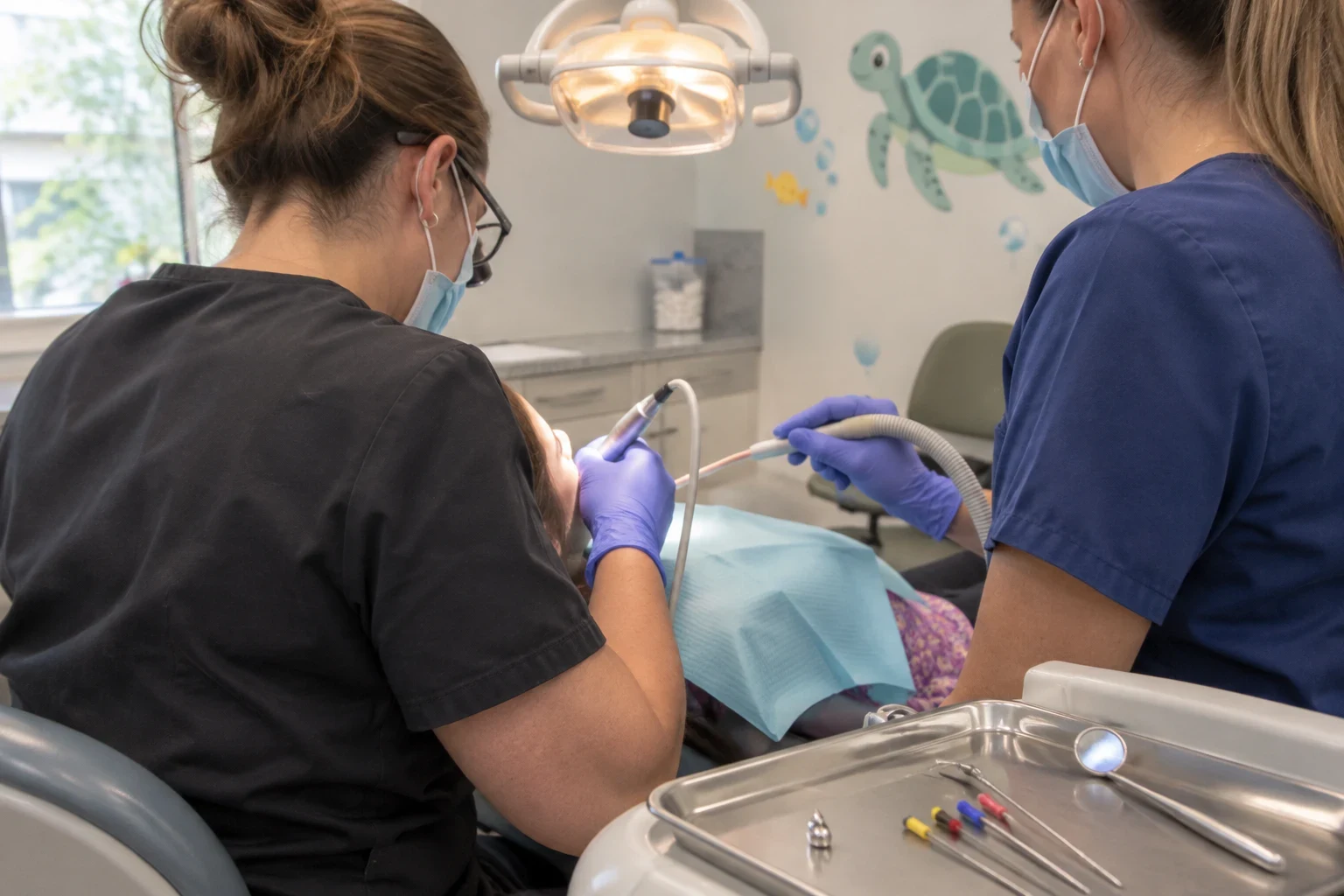
What a root canal means for a child
Inside every tooth is the pulp, soft tissue that holds the nerve and blood supply. A deep cavity or a cracked or bumped tooth can let bacteria reach it. Once the pulp is inflamed or infected, a regular filling is no longer enough.
In baby teeth we most often do a pulpotomy, which removes only the affected pulp in the crown of the tooth and leaves the healthy root tissue in place. When infection has spread further, a pulpectomy cleans out the root canals too. For permanent teeth in older kids and teens, treatment is closer to an adult root canal, adjusted for roots that may still be growing.
Saving a baby tooth is worth the effort. It holds space for the adult tooth, helps your child chew and speak comfortably, and keeping it is often simpler than an extraction followed by a space maintainer.
What the treatment includes
- Exam and X-rays first
- We look at the tooth, the gum around it and an X-ray of the roots before saying anything about treatment. You see the image with us and hear in plain words what it shows.
- Gentle numbing
- A topical gel goes on before the local anesthetic. We talk your child through each step in words that fit their age.
- Removing the damaged pulp
- Decay is cleaned away first, then the inflamed or infected pulp. In a pulpotomy, the remaining tissue is covered with a medicated material that helps it settle and heal.
- Filling the canals
- After a pulpectomy, the canals in a baby tooth are filled with a material that resorbs as the roots dissolve on their own, so it never blocks the adult tooth coming in underneath.
- A crown to protect the tooth
- A treated back tooth is more fragile, so most receive a pediatric crown at the same visit. Stainless steel holds up well on molars, and tooth-colored options suit front teeth.
- Follow-up checks
- At later exams we recheck the tooth with X-rays to confirm it is healing and that the permanent tooth below is developing normally.
Signs your child's tooth may need a closer look
Pain that wakes them at night
A toothache that starts without a trigger, or one that disturbs sleep, often means the pulp is involved.
Sensitivity that lingers
Ordinary sensitivity fades in seconds. Discomfort from something cold or hot that lasts well after the drink is gone is worth checking.
A small bump on the gum
A pimple-like bump near a tooth, sometimes draining a little, usually points to infection at the root.
Swelling near a tooth
Puffy gums or a swollen cheek should be seen promptly. If swelling comes with a fever, contact your child's doctor as well.
A front tooth turning gray
A tooth that darkens after a fall may have a damaged nerve. Some recover on their own, so we test and watch before treating.
A deep cavity found at a cleaning
Decay can reach the pulp before it hurts at all, which is one reason regular exams and cleanings matter.
What affects the cost
No two teeth need quite the same work, so we share the cost once the exam and X-rays show what this tooth requires. For payment, we take MasterCard, Visa and Discover cards, work with most insurance plans, and offer the CareCredit Patient Payment Plan. Before treatment starts, we can walk you through how your plan covers this kind of care.
Pulpotomy or full root canal
Treating only the pulp in the crown of the tooth is a shorter procedure than cleaning and filling every canal down the root.
Which tooth it is
Molars have more canals than front teeth. Permanent teeth whose roots are still forming need additional steps.
The crown chosen
Stainless steel and tooth-colored crowns use different materials and take different amounts of chair time to fit.
Sedation
If your child needs sedation to stay calm through the visit, that is priced as its own part of the care.
How the appointment goes
- 1
Findings before recommendations
We examine the tooth, take an X-ray and explain what we found. If a filling, a root canal or an extraction is the better choice, we tell you why.
- 2
A plan for comfort
Most kids do well with local anesthetic and a calm, unhurried pace. For very young or anxious children, we may discuss options from our sedation dentistry service.
- 3
Treatment and crown
Most pulpotomies are finished in one visit, with the crown placed before your child leaves the chair. A permanent tooth with an infected root may need two visits.
- 4
After you leave
The numbness wears off over a few hours, so we ask that kids skip chewy food and keep an eye on lip and cheek biting until then. Mild soreness is common for a day or two.
- 5
A recheck at the next exam
We take a follow-up X-ray at a routine visit to make sure the tooth and the bone around it look healthy.
Questions parents ask about root canals
Is it worth saving a baby tooth when an adult tooth will replace it?
Often, yes. Back baby teeth can hold on until a child is 10 to 12 years old. If one is lost early, nearby teeth can shift into the gap and crowd the adult tooth's way in. A saved tooth also keeps chewing normal and stops infection from reaching the permanent tooth forming below.
Does a root canal hurt for a child?
We numb the tooth completely before starting, and the inflamed pulp we remove is usually the source of the ache. Most kids notice pressure and sounds rather than pain. A little soreness afterward is expected and settles within a day or two.
Will you always recommend a root canal for an infected tooth?
No. When infection has spread too far, the tooth is nearly ready to come out, or too little healthy structure remains, an extraction may serve your child better. Either way, we go over the X-ray with you and explain our reasoning.
How long will the treated tooth last?
Many treated baby teeth stay healthy until they loosen on their own, with the crown helping protect them along the way. No one can promise how a particular tooth will do, so we check it again with X-rays at later exams.
Can my child go back to school the same day?
In most cases, yes, once the numbness feels manageable to them. If your child had sedation, plan on a quiet afternoon of rest instead.
Have the tooth examined before you decide
A careful exam and a clear explanation come first. If your child is new to our practice, we can set up registration and the first visit in one phone call.