ServicesExtractions
Children's Tooth Extractions in Cumberland
Removing a tooth is never our first idea. We examine your child's mouth, take the X-rays we need and show you what we see. If a tooth has to come out, we take it out gently, numb it well and send you home with clear aftercare.
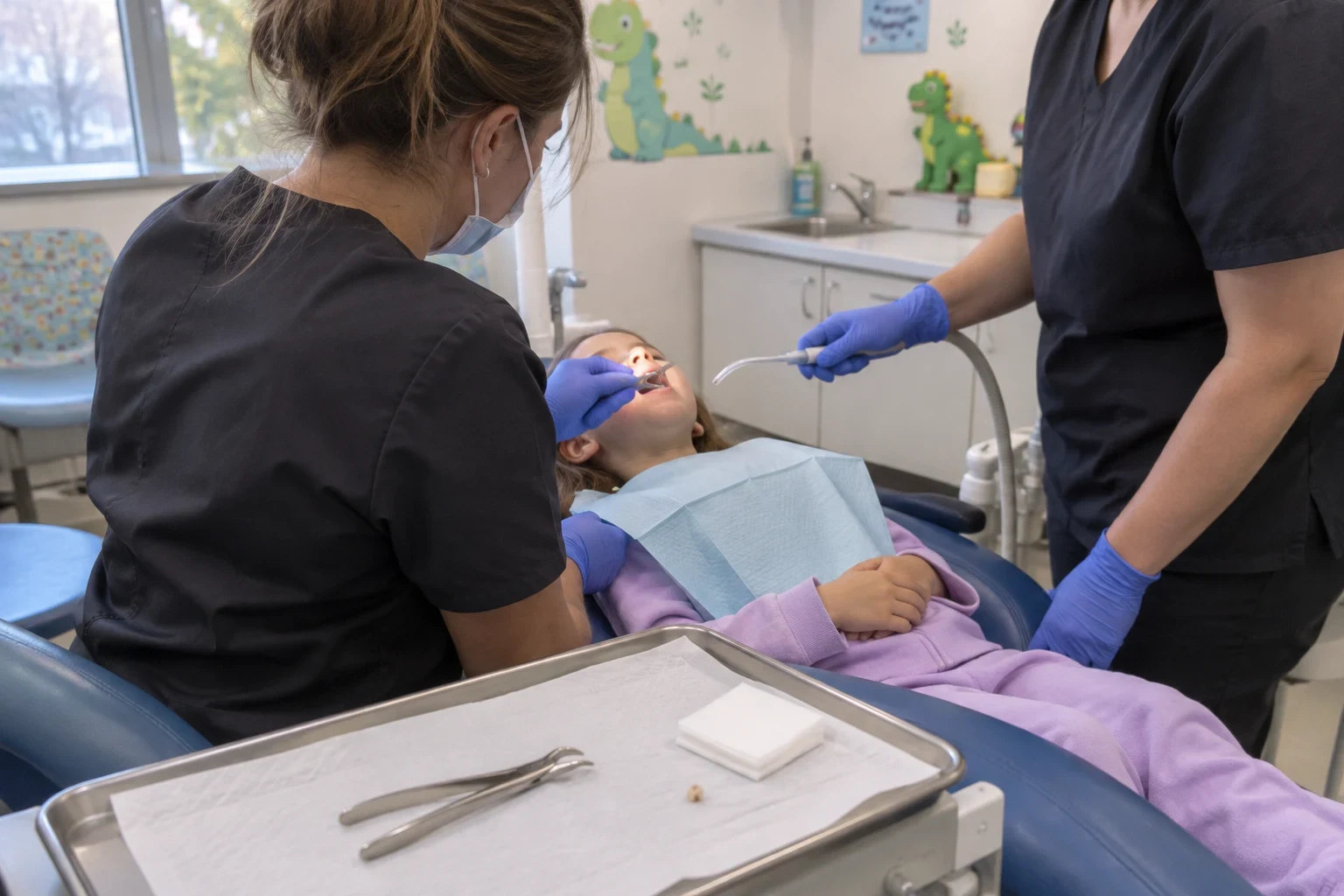
When Taking a Tooth Out Is the Right Call
Most of the time we work hard to keep a child's tooth. Baby teeth hold space for the adult teeth underneath, help kids chew and speak clearly, and guide the jaw as it grows. So before we recommend an extraction, we look closely at the tooth, the root and the adult tooth waiting below it.
Sometimes removal really is the better answer. Decay may have reached so deep that a filling, a pediatric crown or a baby tooth root canal would not last. A baby tooth may refuse to loosen while the adult tooth comes in behind it. An injury may have cracked a tooth below the gumline. In those cases we tell you plainly, explain why, and talk through the other options we ruled out.
Families come to us from Cumberland, Lincoln, Woonsocket and the nearby Massachusetts towns, and the approach is the same for every child: look first, explain clearly, then treat.
What an Extraction With Us Includes
- Exam and X-rays first
- We look at the tooth, the gum tissue around it and where the adult tooth sits underneath. X-rays reveal how long and how curved the roots are, which tells us how straightforward the removal should be.
- Plain findings for parents
- You see the X-ray with us and we point to what concerns us. We explain why removal is on the table and what else we considered, all before anything is booked.
- Careful numbing
- A flavored gel goes on the gum first, then the local anesthetic is given slowly so your child notices very little. We start only once the area is fully numb.
- Sedation when it helps
- For nervous kids, very young children or visits with several teeth, we can talk through options from our sedation dentistry service to keep things calm.
- Planning for the gap
- An early-lost back baby tooth leaves room for neighboring teeth to drift. We check whether one of our space maintainers should hold that spot open for the adult tooth.
- Take-home care notes
- Before you head out, we hand you a short written sheet covering gauze changes, soft foods, when to brush again and what healing normally looks like over the first few days.
When a Tooth Might Need to Come Out
An adult tooth crowding in behind
It is common in the lower front for a permanent tooth to erupt behind a baby tooth that has not loosened. If the baby tooth is still firm after several weeks, it may need our help.
A bump on the gum
A small, pimple-like swelling beside a tooth often signals an infection at the root. Have it looked at soon, even if your child reports no pain.
A tooth broken by a fall
Some injured teeth can be kept. Others split under the gumline or into the root, and an exam with an X-ray tells us which.
Lasting pain or swelling
A toothache that interrupts sleep, or a cheek that looks puffy, usually points to deep decay. Let us examine it before anyone decides on treatment.
A grayish or very loose tooth
A tooth that darkens after a knock, or wiggles long before it should, calls for a close look at the root and the bone around it.
How Extraction Day Goes
- 1
A quiet start
We walk you and your child through the plan using kid-friendly language. Kids hear what they will feel, and nothing meant to scare them.
- 2
Numbing and checking
First the topical gel, then the local anesthetic. We test the spot and give it time until your child is comfortable.
- 3
Gentle removal
Most baby teeth are out within a few minutes using slow, steady pressure. Your child may notice pushing, but sharp pain should not be part of it.
- 4
Gauze and settling down
A folded piece of gauze goes over the site, and your child holds it firmly between the teeth while the bleeding slows. We look at the area once more, answer your questions and review the care notes with you.
- 5
Follow-up as needed
When a space maintainer is part of the plan, we book the fitting. If not, we check the healed spot at your child's next exam and cleaning.
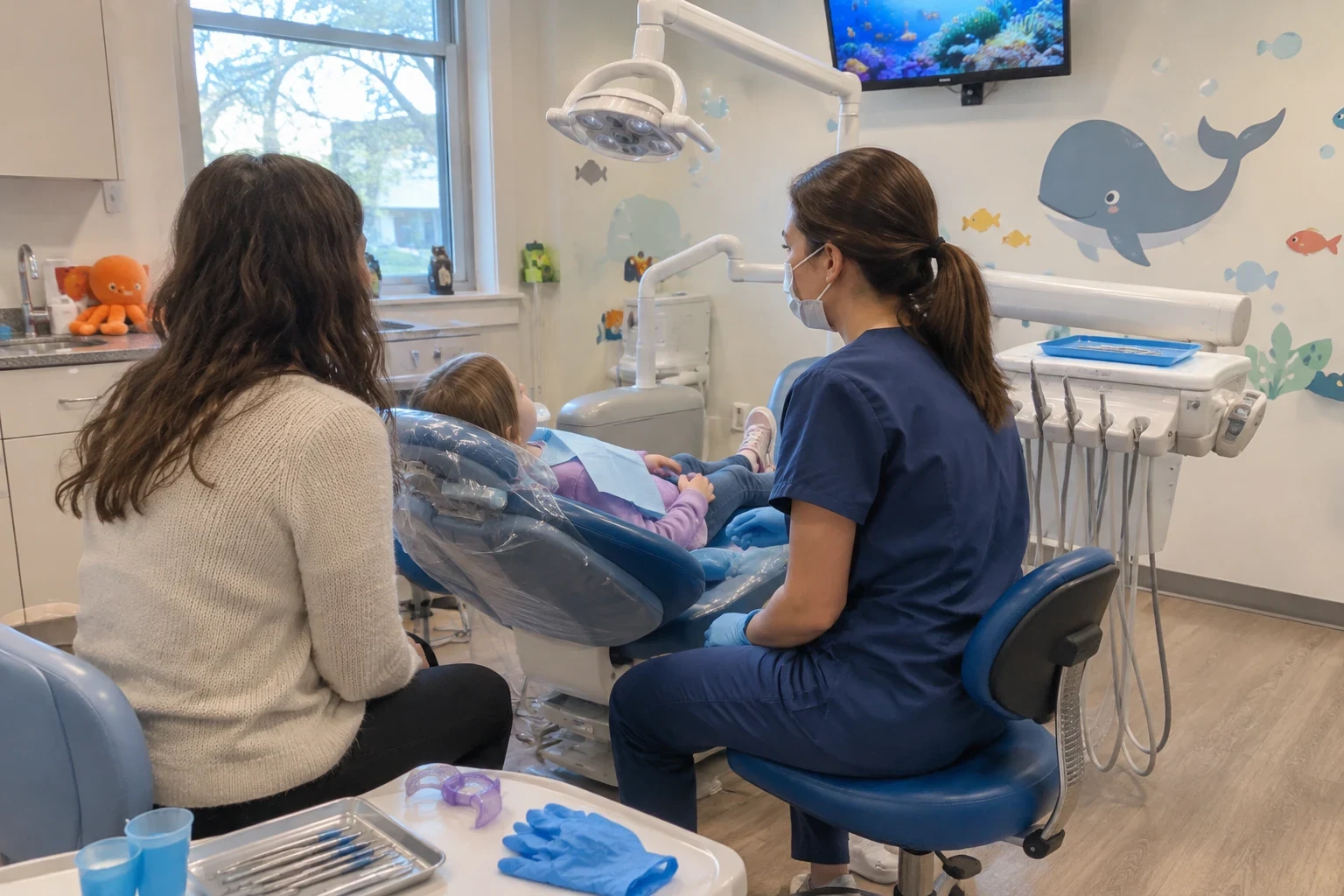
What Shapes the Cost of an Extraction
We can give you a clear estimate once the exam and X-rays show us the tooth and its roots. Until then, these are the details that usually move the number. For payment, we take MasterCard, Visa and Discover, work with most insurance plans and offer the CareCredit Patient Payment Plan.
- Root shape and tooth position
- A wobbly baby tooth comes out far more simply than a molar with long, curved roots or a tooth that has broken off under the gum.
- How many teeth
- Taking out more than one tooth at the same visit adds chair time and materials.
- Whether sedation is used
- When a child needs sedation to stay calm and safe, it is planned and billed as its own part of the appointment.
- Holding the space
- Losing a back baby tooth early can mean your child needs a space maintainer. That appliance is estimated separately so you can see each piece.
- What your plan covers
- Benefits differ from plan to plan. We look over your coverage with you ahead of treatment so the bill holds no surprises.
Questions Parents Ask About Extractions
Something not covered here? (401) 386-9575
Will it hurt my child?
The area is numbed thoroughly before we start, so most kids feel pressure rather than pain. Afterward, mild soreness for a day or two is normal. We will tell you which children's pain reliever and dose your pediatrician or we recommend.
Couldn't the tooth just be filled instead?
Often it can, and we will say so. We recommend removal only when the X-ray and exam show the tooth cannot be restored in a way that will last, or when it is blocking an adult tooth. We will walk you through what we saw.
What can my child eat afterward?
Soft, cool foods such as yogurt, applesauce and pasta are best for the first day. Skip straws, crunchy snacks and very hot drinks while the site heals. Brushing resumes the next day, gently around the area.
How do I stop my child from biting a numb lip?
The numbness can last a couple of hours, and kids are curious about the strange feeling. Keep an eye on them, hold off on food until it wears off and remind them not to chew their lip or cheek.
Can my child go to school the next day?
Most kids are back to normal activities the next day. We suggest a quiet afternoon after the visit and no rough play or sports until the following day.
Does every early tooth loss need a space maintainer?
No. Front baby teeth usually do not need one. Back molars lost well before their time often do, because the teeth beside them tend to shift. We check your child's age and X-ray before recommending one.
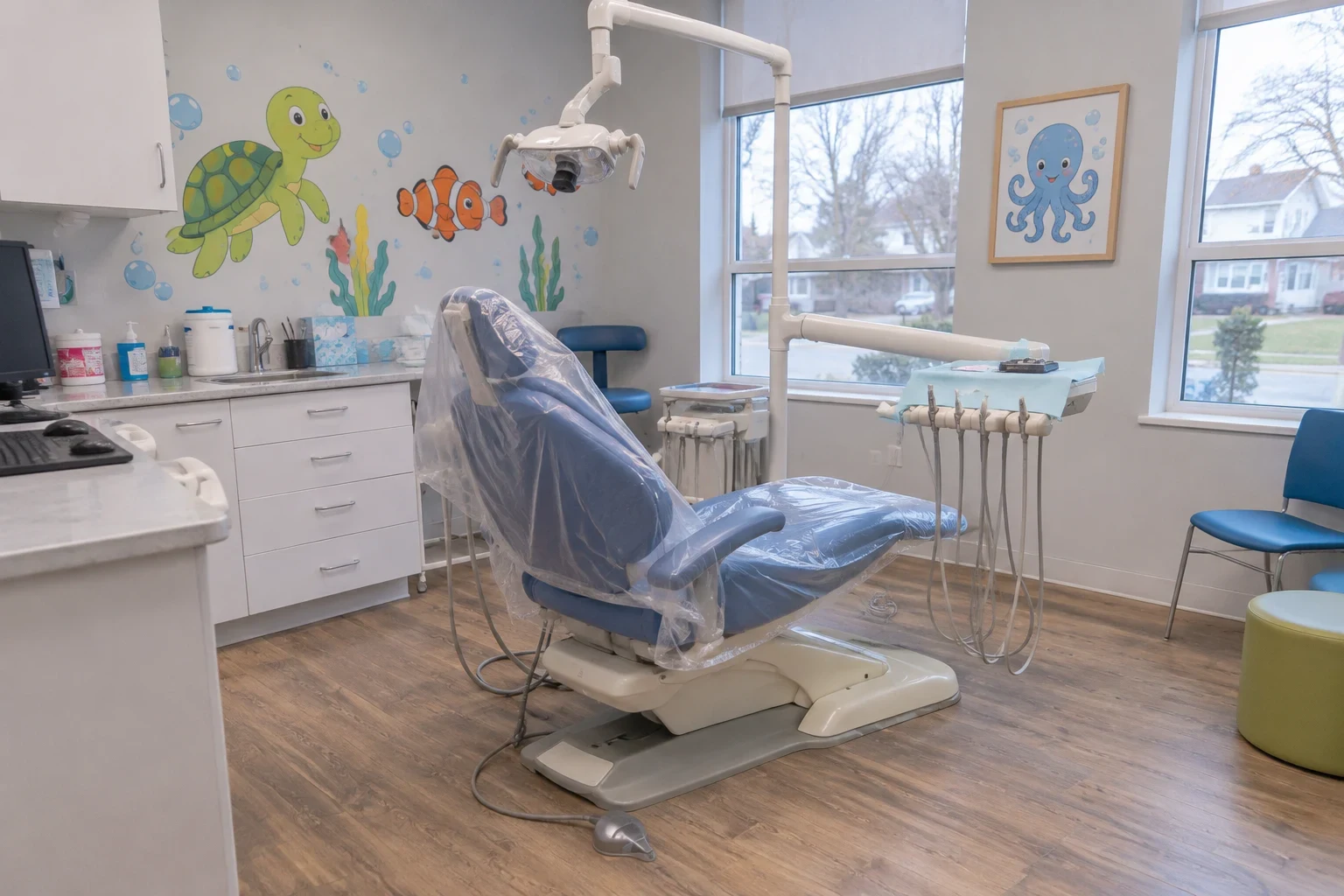
Have a Tooth You're Unsure About
Let us take a careful look and tell you honestly whether the tooth can stay. One phone call gets your child registered as a new patient and a first appointment on the calendar.